Artificial Intelligence
Across our investment areas, NewSchools funds early-stage ventures that use AI to improve teaching and learning. We believe AI is most powerful when grounded in research, co-created with educators, and designed for real classrooms.
2025 Investments
In 2025, we expanded our AI portfolio by investing in 22 new ventures, bringing the total to 47 AI-powered solutions supported since 2019. Outside of our schools portfolio, 70% of funded ventures leverage AI to improve outcomes for students furthest from opportunity. We also launched the GenAI Math Tutoring Program, which provides research & development support for developers to keep quality, evidence, and inclusion at the center of their design.
$4.9M
invested
22
funded ventures
53%
led by former educators
Impact Highlight
AI-enabled solutions with rigorous evidence reported a 13% increase in K-8 reading and math achievement on average.

What We’re Learning

Venture Spotlight
What if the Best Way To Learn Math Is To Teach It?
For many students, math becomes something to memorize and move past. Research suggests deeper learning happens when students explain ideas and teach others. ALTER-Math was built on that insight.
Developed by researchers at the University of Utah in collaboration with multiple institutions in the U.S., ALTER-Math invites students to teach a simple AI agent what they know. As students explain concepts and correct misunderstandings, the agent updates its knowledge in real time. This process encourages reflection, conceptual understanding, and active learning.
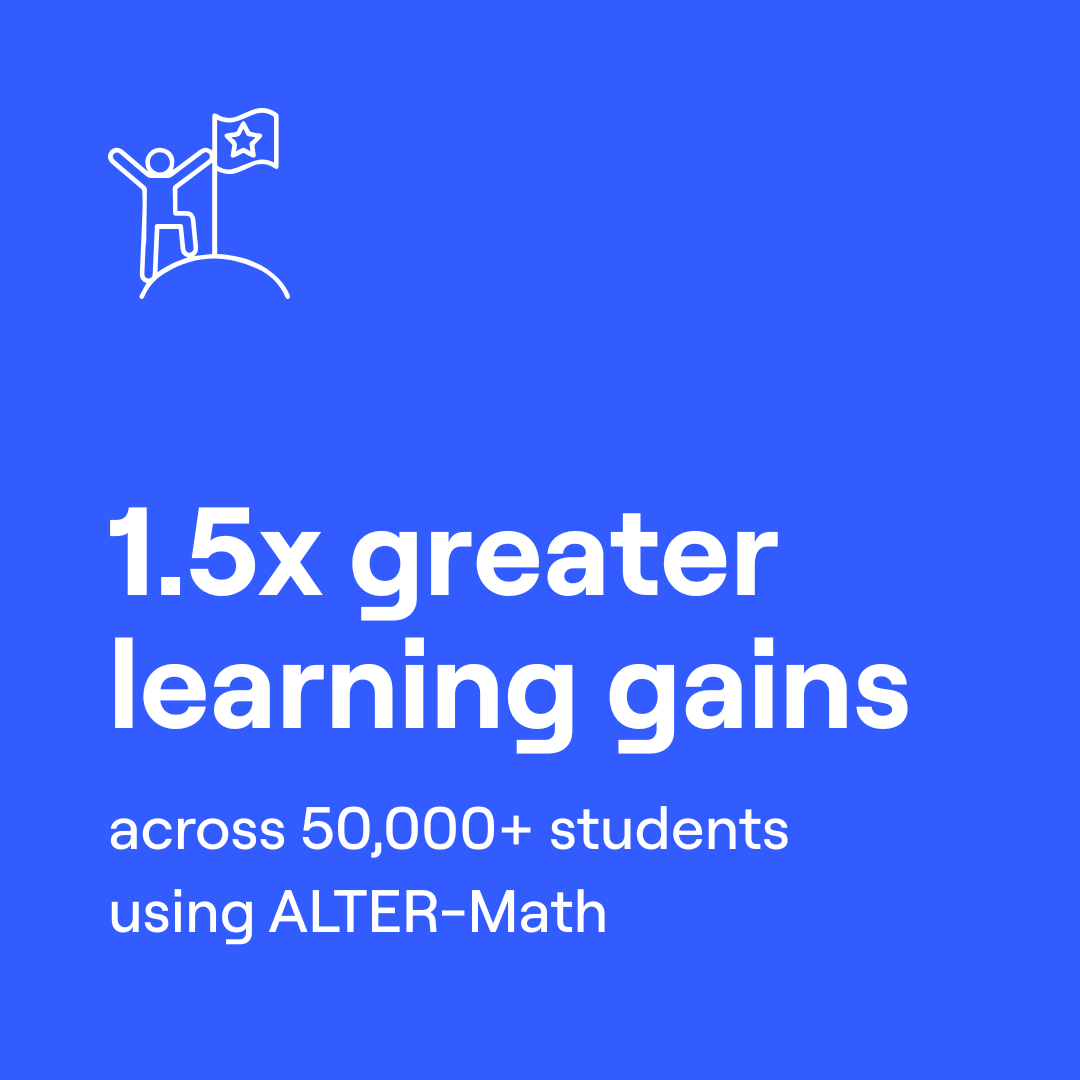
Led by Dr. Chenglu Li, whose own learning was shaped by teaching peers, the team has aligned ALTER-Math with Math Nation, a widely used, standards-aligned curriculum. In early pilots with tens of thousands of students, those using the teachable agent showed nearly 50% greater learning gains than peers using traditional tools.
ALTER-Math is designed with access in mind. The tool is offered at no cost, with plans to open-source the technology so others can build on it. As states explore how to use AI responsibly in classrooms, ALTER-Math offers a model that supports learning by putting students in the role of active thinkers and teachers.